
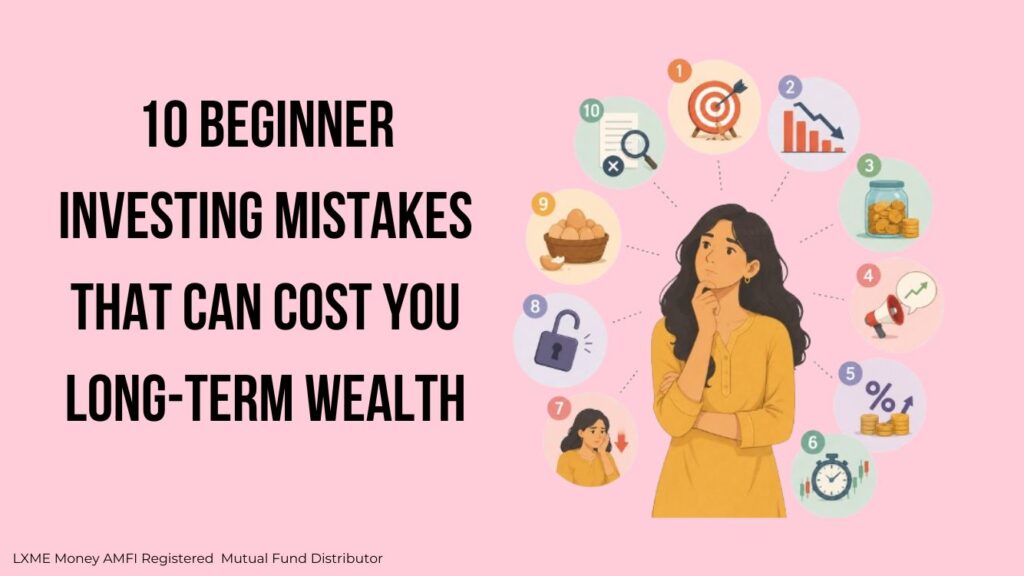
Many new investors make mistakes while investing for the first time. But some are avoidable once you know what to look for. Here are the most common investing mistakes beginners make, and let’s see how to avoid them before they cost you real money down the line.
- Not building an emergency fund first.
It is important to protect yourself from big or unexpected medical bills (not covered by health insurance), losing your job, or having unexpected home repairs. This is where your emergency fund becomes your saviour
Set aside 6 to 8 months’ worth of expenses that protect you during hard times. If this fund is not made, then you might have to remove money from your lifelong savings or investments in order to fulfill these needs, which can reduce your overall long-term returns and, in turn, affect your long-term wealth.
- Investing without a clear goal.
Money set aside without a purpose attached to it is easy to pull out impulsively. Know what you’re investing for: a home, retirement, child’s education, or a goal five years away, before you begin putting money in. Goal setting is the first step of investing, as your goals determine your investment pattern.
- Following tips from friends
When you get a tip from a friend, or see their portfolio, do not blindly follow it because it looks fascinating. It’s someone else’s decisions made without knowing your goals or risk comfort. So, always assess your goals, risk appetite, time horizon (time period you want to invest for), and then make a decision for yourself. Most importantly, don’t just follow trends and take the time to look into it yourself before putting money in.
- Putting everything into one asset class.
Don’t put all your eggs in one basket. If you drop that basket, every egg breaks. Money works the same way. Put some in equity (moves up and down but has potential to deliver inflation-beating returns over long term), some in debt (it maintains stability in your portfolio), some in gold (it protects against inflation), and some in fixed income instruments (for fixed income). This way, if equity has a bad day and turns red, the others can hold you up so your whole portfolio doesn’t fall with it. This is how you can balance risk & return in your investment portfolio.
- Trying to time the market.
Waiting for the perfect moment to start investing is not as important as simply starting. Investing regularly and consistently is better than trying to guess when prices will go down.
For instance: Ankita and Riya both started their jobs together. While Ankita started her ₹2,000 SIP at a return of 13% p.a.* right away, Riya waited for 2 years for the “right time to start”. Riya put in only ₹48,000 less than Ankita (2 years × ₹2,000/month), but ends up with about ₹7.3 lakh less at 45.
*They started investing in equity mutual funds. Mutual funds are subject to market risks, read all scheme related documents carefully.
You can start investing through SIP with Lxme’s expert curated mutual fund portfolios and start building your wealth.
- Expecting overnight returns.
Real wealth builds slowly, over years, not weeks. Anyone who promises you fast guaranteed returns is not someone you should be listening to. If someone says it, be aware because it can be a scam.
- Never reviewing your investments.
Life changes, and so should your investments. Reassess your goals and risk appetite (capacity to take risk) once or twice a year and make changes to your portfolio accordingly.
- Panic selling/withdrawing your investments when markets fall.
Equity markets go up and down. They are volatile and risky in the short term, but have the potential to deliver inflation-beating returns over the long term and help in creating wealth. Selling/withdrawing investments in a panic can leave you stuck with losses or take away opportunities to create wealth & power of compounding that would most likely have recovered with a little time and patience. So during such times, it is best to stay calm and invested. Staying invested or investing more during market volatility is the actual time and opportunity that can help you build wealth.
- Skipping research before investing.
It is important to understand the assets or investment options you are putting your money into and how they behave. Equity markets are for long-term investment, and treating them as short-term will make you disappointed with the returns, and instead of sticking with them, you either end up selling or withdrawing them.
- Not turning investing into a habit.
Real wealth comes from investing regularly, month after month, and sticking with it, not just from one good decision followed by months of doing nothing.
Here’s what that actually looks like in numbers. Say Priya invests ₹500 every single month for 20 years, never skipping. Riya also meant to invest ₹500 a month, but she skipped whenever money felt tight or the market looked shaky, and most of those skips happened in the early years when she was still settling in life. She ended up investing in about half the months compared to Priya, roughly ₹60,000 in total.
Assuming both get a similar 12% average annual return, Priya’s consistent investing could grow to roughly ₹5 lakh. You’d expect Riya to land around half of Priya’s ₹5 lakh. Instead she’s closer to ₹1.2 lakh, well under half. That gap isn’t the money she didn’t put in; it’s the time that money never got. The rupees you skip early are the ones that had two decades to grow. Miss those, and you’re not saving ₹500, you’re giving up everything those ₹500 could have become.
Getting Started the Right Way
These investment tips for beginners aren’t complicated; it just requires patience and a bit of awareness. A good investment app for women, like Lxme, makes this easier by offering expert-curated diversified mutual fund portfolios where you can start investing with just Rs.100. Investing isn’t about being perfect from day one. It’s about avoiding the errors that quietly cost you the most over time.
Now become a smart investor from day one!