
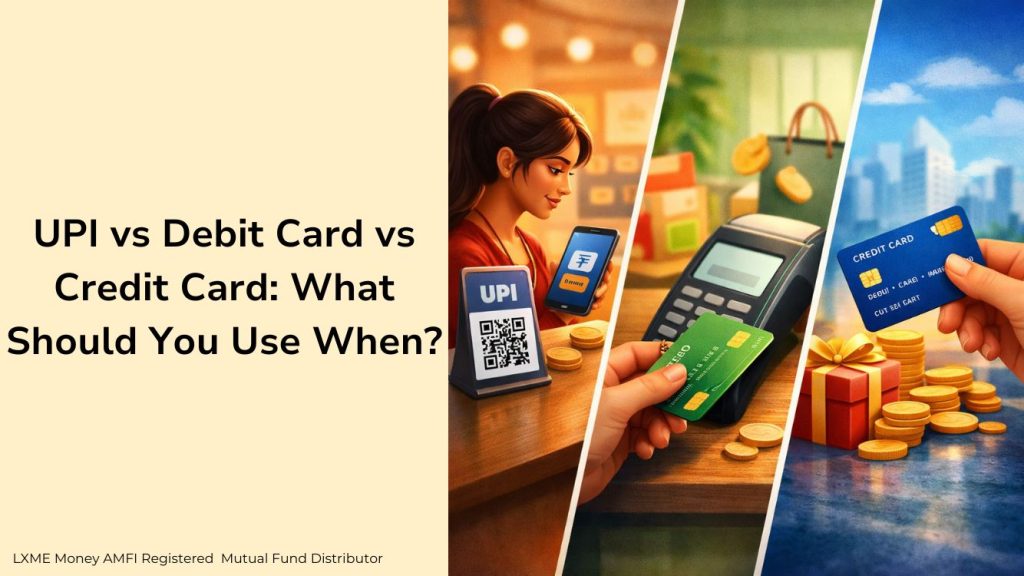
Women today manage multiple roles and money often sits at the centre of it all. From household expenses and children’s needs to personal goals and long-term security, the way we pay matters more than we realise. UPI, debit cards, and credit cards are all useful tools, but using them thoughtfully can help women stay in control of their finances instead of feeling overwhelmed by them.
What is UPI?
UPI has become the go-to option for daily payments because it is fast, simple, and directly linked to your bank account. The money is deducted instantly, so there is no borrowing or interest involved. For many women, UPI is ideal for everyday expenses such as groceries, milk and vegetables, school-related payments, salon visits, or splitting household bills.
Its biggest advantage is convenience and transparency payments take seconds and every transaction is recorded, making tracking easier. However, because UPI feels effortless, small frequent spends can quietly add up. Regularly checking your statements or setting alerts helps ensure UPI remains a smart tool for managing daily expenses without overspending. However, because UPI feels effortless, small frequent spends can quietly add up. That’s why tracking your expenses is important. With LxmePay’s unique feature expense tracker, you can easily monitor your UPI spends, see where your money is going, and stay on top of daily expenses. Regular tracking helps ensure UPI remains a smart, stress-free tool without overspending or losing control of your budget – .https://lxme.onelink.me/95JV/homefeed74
What is a Debit card?
A debit card is a payment card that lets you spend your own money directly from your bank account. Whenever you use a debit card for shopping, online payments, or ATM withdrawals, the amount is immediately deducted from your account balance.
Debit cards are commonly used for everyday and monthly expenses because they help you stay within your budget and you can only spend what you already have. They are accepted at ATMs, shops, and online platforms, making them a convenient alternative to cash.
Since there is no borrowing involved, debit cards do not attract interest or repayment pressure. This makes them a good option for controlled spending, especially for people who want to avoid debt and manage their finances responsibly.
What is a credit card?
A credit card is a payment card that allows you to borrow money from the bank to make purchases, with the option to pay it back later. Instead of using your own savings immediately, the bank gives you a credit limit, and you can spend up to that amount.
If you repay the full bill within the due date, you usually don’t pay any interest. This makes credit cards useful for planned expenses, larger purchases, and online payments where added protection is important. Credit cards also offer benefits like cashback, reward points, discounts, and help in building a good credit history.
However, credit cards require discipline. Paying only the minimum amount or missing due dates leads to high interest charges and can create debt. When used responsibly and repaid on time, a credit card can be a powerful financial tool rather than a financial burden.
Difference between Debit card, Credit card, and UPI.
| Features | Debit Card | Credit Card | UPI |
|---|---|---|---|
| Linked to bank | Direct access to your bank funds | Borrowed funds from a bank | Direct access to your bank funds |
| Interest charges | None | Yes, if full bill is not paid | None |
| Payment type | Immediate deduction from account | Deferred payment (pay later) | Instant transfer |
| Rewards | Minimal or none | Cashback, reward points, offers | No rewards, but very low cost |
| Transaction fees | Minimal (ATM or network charges) | Interest and possible annual fees | Minimal or usually free |
| Usage scope | Online, offline, ATMs | Online, offline, international transactions | Online, QR code, P2P & P2M payments |
Tips for Choosing the Right Payment Mode
With multiple payment options available today, choosing between UPI, a debit card, or a credit card depends on how you spend, how often you transact, and how much flexibility you need. Using the right payment mode at the right time can help you stay in control of your money and avoid unnecessary costs.
- For daily transactions:
UPI or a debit card works best for regular, low-value expenses such as groceries, local shopping, or bill payments. These options are cost-effective, easy to use, and involve no borrowing or interest. - For big-ticket purchases:
A credit card is better suited for planned, high-value expenses like electronics, travel, or appliances. It offers the benefit of deferred payment, reward points, and sometimes EMI options provided the bill is paid in full and on time. - For security and online payments:
UPI adds a layer of safety by using a virtual payment address instead of sharing bank or card details. This makes it a secure option for online and QR-based transactions. - For international transactions:
Credit cards are usually the most convenient choice due to their wide global acceptance and better protection for overseas purchases.
UPI, debit cards, and credit cards each serve a different purpose. UPI is ideal for fast, everyday payments, debit cards help you spend within your available balance, and credit cards offer flexibility, rewards, and the ability to build a credit history. The key is not to rely on just one payment method, but to use each one thoughtfully based on the situation, your spending habits, and your financial goals.
FAQs
Are debit cards becoming less popular due to UPI?
Yes, debit cards are becoming less popular for retail transactions due to the rapid and widespread adoption of the Unified Payments Interface (UPI) in India
Which payment method is best for people who want to avoid debt?
The payment methods that best help people avoid debt are debit cards and UPI, as they restrict spending to the money you already have available.
Do debit cards offer any rewards?
Yes, many debit cards offer rewards like cashback, reward points, and discounts, though generally not as extensive as credit cards
Does UPI support EMI like credit cards?
Scan any Merchant QR and pay with EMI@UPI. Discover the ease of paying with EMI through UPI Scan to Pay for merchant QR codes.